<Master Woo's Weekly Blog · Every Thursday · Taekwondo & Life>
Little Lions (Ages 3–5) | Lion Martial Arts Taekwondo
"Why doesn't my child listen?"
"My child cannot sit still or stay focused."
"My child is too shy to participate in group activities."
These are concerns we often hear from parents of young children.
Between the ages of three and five, children are discovering the world around them while learning how to understand their emotions, control their bodies, and interact with others.
Sometimes they listen. Sometimes they don't.
Sometimes they are full of confidence. Other times, even taking one small step forward feels overwhelming.
But after years of teaching young children, I have learned something important:
A child's ability to focus, listen, and participate is not simply something they either have or don't have. It is something that can grow.
And sometimes, that growth is nothing short of extraordinary.
𝟭. 𝘽𝙚𝙛𝙤𝙧𝙚 𝘾𝙝𝙞𝙡𝙙𝙧𝙚𝙣 𝙇𝙚𝙖𝙧𝙣 𝙩𝙤 𝙇𝙞𝙨𝙩𝙚𝙣, 𝙏𝙝𝙚𝙮 𝙉𝙚𝙚𝙙 𝙩𝙤 𝙁𝙚𝙚𝙡 𝙎𝙖𝙛𝙚
When parents think about discipline, they often imagine children standing quietly, following instructions, and responding immediately.
But for a three-year-old entering an unfamiliar environment, even standing on the training mat can be a tremendous challenge.
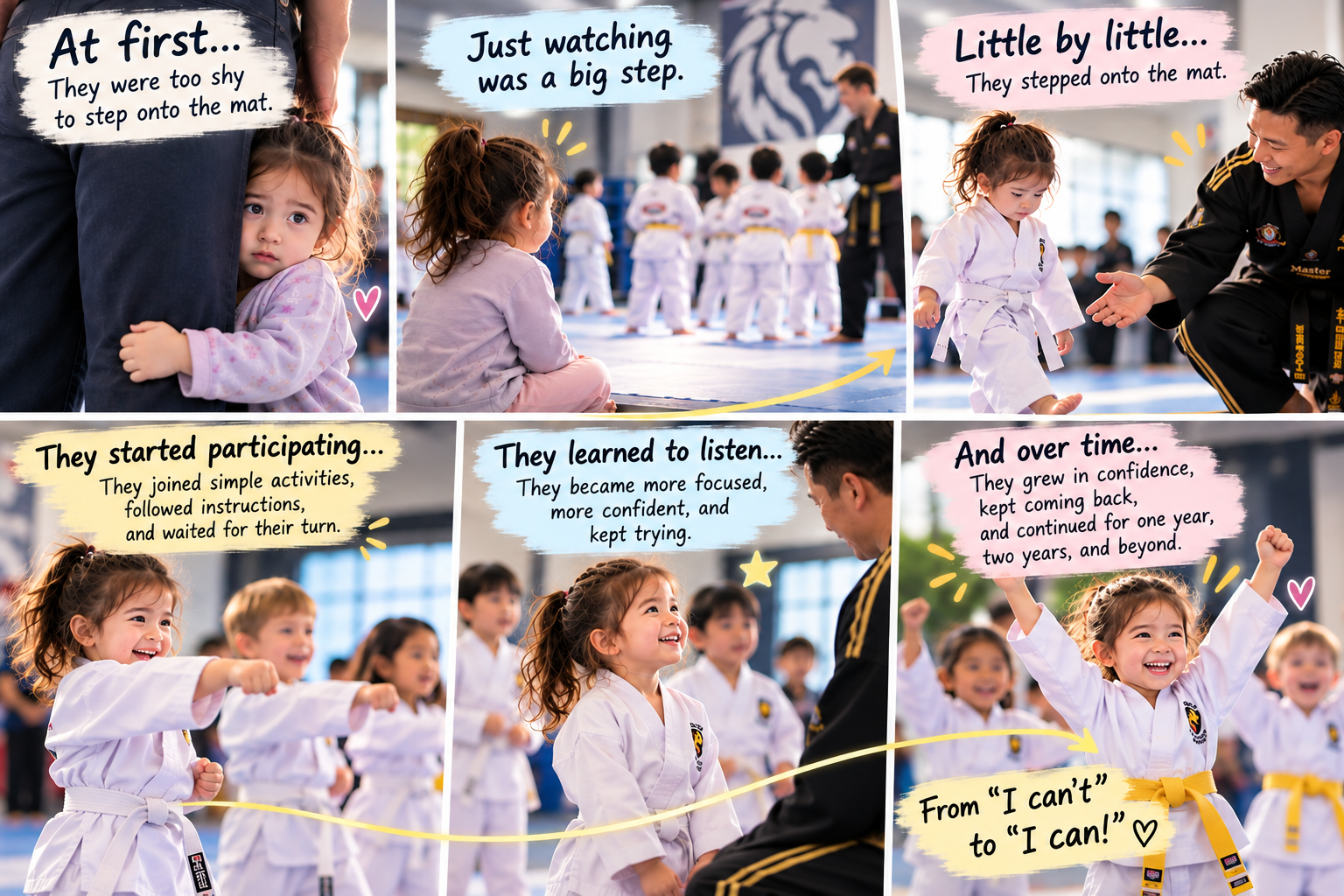
Over the years, we have met children who could not step onto the mat during their first class.
Some cried. Some held tightly to their parents. Others stood silently, watching the class from a distance.
To an adult, stepping onto a mat might seem like the simplest thing in the world.
But to a young child, it can feel like entering an entirely new world.
In those moments, our first responsibility is not to demand perfect listening or immediate participation.
It is to help the child feel safe, accepted, and understood.
Because before children can learn confidently, they often need to feel that they belong.
𝟮. 𝙏𝙝𝙚 𝙎𝙢𝙖𝙡𝙡𝙚𝙨𝙩 𝙎𝙩𝙚𝙥𝙨 𝘾𝙖𝙣 𝘽𝙚𝙘𝙤𝙢𝙚 𝙩𝙝𝙚 𝙂𝙧𝙚𝙖𝙩𝙚𝙨𝙩 𝙑𝙞𝙘𝙩𝙤𝙧𝙞𝙚𝙨
Some of the most unforgettable experiences in our school have come from children who initially seemed unable to participate.
I remember the kinds of moments when a child would not even step onto the mat.
At first, simply watching the class was all they could manage.
Then, little by little, something began to change.
One day, the child stepped onto the mat.
Another day, they joined a simple activity.
Eventually, they began following instructions, practicing kicks, and participating alongside the other children.
And what makes these experiences even more meaningful is that some of these children have continued training for one year, two years, and beyond.
The child who once could not step onto the mat became a student who returned week after week, ready to learn.
It is almost like watching a little bird finally break through its shell and discover a world it never knew existed.
These transformations are among the most beautiful experiences I have witnessed as a Taekwondo instructor.
They remind me that we should never judge a child's potential by their first day.
A difficult beginning does not determine the future.
𝟯. 𝙇𝙞𝙨𝙩𝙚𝙣𝙞𝙣𝙜 𝙄𝙨 𝙈𝙤𝙧𝙚 𝙏𝙝𝙖𝙣 𝙁𝙤𝙡𝙡𝙤𝙬𝙞𝙣𝙜 𝘾𝙤𝙢𝙢𝙖𝙣𝙙𝙨
In our Little Lions classes, we practice simple instructions such as:
"Eyes on Master!"
"Ready position!"
"Wait for your turn!"
"Let's try again!"
These instructions may sound simple, but they help children practice important developmental abilities.
When a child stops moving to listen, they are practicing attention and self-control.
When a child remembers and follows a sequence of instructions, they are using working memory.
When a child waits for their turn, they are practicing patience and emotional regulation.
And when a child makes a mistake but tries again, they are developing perseverance.
Young children do not master these skills overnight.
They need repetition, structure, encouragement, and opportunities to succeed.
True discipline is not simply about making children obey. It is about helping them gradually learn to guide their own behavior.
𝟰. 𝙀𝙫𝙚𝙧𝙮 𝘾𝙝𝙞𝙡𝙙 𝙃𝙖𝙨 𝙖 𝘿𝙞𝙛𝙛𝙚𝙧𝙚𝙣𝙩 𝙎𝙩𝙖𝙧𝙩𝙞𝙣𝙜 𝙋𝙤𝙞𝙣𝙩
One of the greatest mistakes adults can make is comparing children too quickly.
Some three-year-olds are naturally confident and eager to participate.
Others are cautious, sensitive, quiet, or easily distracted.
Some children learn physical movements quickly but struggle to listen.
Others listen carefully but hesitate to express themselves.
Neither child is necessarily ahead or behind in every area.
They simply have different strengths, temperaments, and developmental needs.
As instructors, our responsibility is to recognize those differences and guide each child appropriately.
For one child, success may mean performing a strong kick.
For another, success may mean answering a question loudly enough for others to hear.
And for another, success may mean letting go of a parent's hand and stepping onto the mat independently.
The size of an achievement should never be measured only by what adults can see. Sometimes the smallest action requires the greatest courage.
𝟱. 𝙂𝙧𝙤𝙬𝙩𝙝 𝙄𝙨 𝙉𝙤𝙩 𝘼𝙡𝙬𝙖𝙮𝙨 𝙖 𝙎𝙩𝙧𝙖𝙞𝙜𝙝𝙩 𝙇𝙞𝙣𝙚
Even after children begin participating confidently, there may still be difficult days.
A child who listened beautifully yesterday might struggle to focus today.
A child who entered class independently last week might suddenly want their parent nearby again.
This does not mean that all their previous progress has disappeared.
Child development is rarely a perfectly straight line.
Growth often includes hesitation, frustration, repetition, and setbacks.
What matters is creating an environment where children can continue learning without feeling that every mistake is a failure.
When we respond with patience and consistency, we help children understand that challenges are part of learning.
Over time, these experiences can support not only better listening and concentration but also confidence, independence, and resilience.
𝟲. 𝙏𝙝𝙚 𝙍𝙚𝙖𝙡 𝙈𝙞𝙧𝙖𝙘𝙡𝙚 𝙄𝙨 𝙒𝙖𝙩𝙘𝙝𝙞𝙣𝙜 𝙖 𝘾𝙝𝙞𝙡𝙙 𝘿𝙞𝙨𝙘𝙤𝙫𝙚𝙧 𝙏𝙝𝙚𝙞𝙧 𝙊𝙬𝙣 𝙋𝙤𝙩𝙚𝙣𝙩𝙞𝙖𝙡
After years of teaching Taekwondo, I have witnessed many moments that felt like little miracles.
Not because a child suddenly performed a perfect kick.
Not because a child earned a new belt.
But because a child accomplished something that once seemed impossible for them.
A child who was afraid to enter the training area eventually walked in independently.
A child who once stood silently began responding with confidence.
A child who struggled to participate became an enthusiastic member of the class.
And some of those children are still training with us after one or two years, continuing to grow in ways that would have been difficult to imagine on their first day.
These experiences remind me why I became an instructor.
Taekwondo is not only about physical skills, discipline, or martial arts techniques.
It is also about believing in a child's potential, even when that child cannot yet see it.
As teachers and parents, we may sometimes become impatient because we want children to improve quickly.
But children do not grow according to our schedules.
They grow through their own experiences, at their own pace, with the support of people who refuse to give up on them.
Sometimes, the greatest achievement in Taekwondo is not a powerful kick or a black belt.
It is the moment a child who once whispered, "I can't," begins to believe, "I can."
And as a Taekwondo instructor, there are few things more rewarding than witnessing that transformation.


<Master Woo's Weekly Blog · Every Thursday · Taekwondo & Life>
Little Lions (Ages 3–5) | Lion Martial Arts Taekwondo
"Why doesn't my child listen?"
"My child cannot sit still or stay focused."
"My child is too shy to participate in group activities."
These are concerns we often hear from parents of young children.
Between the ages of three and five, children are discovering the world around them while learning how to understand their emotions, control their bodies, and interact with others.
Sometimes they listen. Sometimes they don't.
Sometimes they are full of confidence. Other times, even taking one small step forward feels overwhelming.
But after years of teaching young children, I have learned something important:
A child's ability to focus, listen, and participate is not simply something they either have or don't have. It is something that can grow.
And sometimes, that growth is nothing short of extraordinary.
𝟭. 𝘽𝙚𝙛𝙤𝙧𝙚 𝘾𝙝𝙞𝙡𝙙𝙧𝙚𝙣 𝙇𝙚𝙖𝙧𝙣 𝙩𝙤 𝙇𝙞𝙨𝙩𝙚𝙣, 𝙏𝙝𝙚𝙮 𝙉𝙚𝙚𝙙 𝙩𝙤 𝙁𝙚𝙚𝙡 𝙎𝙖𝙛𝙚
When parents think about discipline, they often imagine children standing quietly, following instructions, and responding immediately.
But for a three-year-old entering an unfamiliar environment, even standing on the training mat can be a tremendous challenge.
Over the years, we have met children who could not step onto the mat during their first class.
Some cried. Some held tightly to their parents. Others stood silently, watching the class from a distance.
To an adult, stepping onto a mat might seem like the simplest thing in the world.
But to a young child, it can feel like entering an entirely new world.
In those moments, our first responsibility is not to demand perfect listening or immediate participation.
It is to help the child feel safe, accepted, and understood.
Because before children can learn confidently, they often need to feel that they belong.
𝟮. 𝙏𝙝𝙚 𝙎𝙢𝙖𝙡𝙡𝙚𝙨𝙩 𝙎𝙩𝙚𝙥𝙨 𝘾𝙖𝙣 𝘽𝙚𝙘𝙤𝙢𝙚 𝙩𝙝𝙚 𝙂𝙧𝙚𝙖𝙩𝙚𝙨𝙩 𝙑𝙞𝙘𝙩𝙤𝙧𝙞𝙚𝙨
Some of the most unforgettable experiences in our school have come from children who initially seemed unable to participate.
I remember the kinds of moments when a child would not even step onto the mat.
At first, simply watching the class was all they could manage.
Then, little by little, something began to change.
One day, the child stepped onto the mat.
Another day, they joined a simple activity.
Eventually, they began following instructions, practicing kicks, and participating alongside the other children.
And what makes these experiences even more meaningful is that some of these children have continued training for one year, two years, and beyond.
The child who once could not step onto the mat became a student who returned week after week, ready to learn.
It is almost like watching a little bird finally break through its shell and discover a world it never knew existed.
These transformations are among the most beautiful experiences I have witnessed as a Taekwondo instructor.
They remind me that we should never judge a child's potential by their first day.
A difficult beginning does not determine the future.
𝟯. 𝙇𝙞𝙨𝙩𝙚𝙣𝙞𝙣𝙜 𝙄𝙨 𝙈𝙤𝙧𝙚 𝙏𝙝𝙖𝙣 𝙁𝙤𝙡𝙡𝙤𝙬𝙞𝙣𝙜 𝘾𝙤𝙢𝙢𝙖𝙣𝙙𝙨
In our Little Lions classes, we practice simple instructions such as:
"Eyes on Master!"
"Ready position!"
"Wait for your turn!"
"Let's try again!"
These instructions may sound simple, but they help children practice important developmental abilities.
When a child stops moving to listen, they are practicing attention and self-control.
When a child remembers and follows a sequence of instructions, they are using working memory.
When a child waits for their turn, they are practicing patience and emotional regulation.
And when a child makes a mistake but tries again, they are developing perseverance.
Young children do not master these skills overnight.
They need repetition, structure, encouragement, and opportunities to succeed.
True discipline is not simply about making children obey. It is about helping them gradually learn to guide their own behavior.
𝟰. 𝙀𝙫𝙚𝙧𝙮 𝘾𝙝𝙞𝙡𝙙 𝙃𝙖𝙨 𝙖 𝘿𝙞𝙛𝙛𝙚𝙧𝙚𝙣𝙩 𝙎𝙩𝙖𝙧𝙩𝙞𝙣𝙜 𝙋𝙤𝙞𝙣𝙩
One of the greatest mistakes adults can make is comparing children too quickly.
Some three-year-olds are naturally confident and eager to participate.
Others are cautious, sensitive, quiet, or easily distracted.
Some children learn physical movements quickly but struggle to listen.
Others listen carefully but hesitate to express themselves.
Neither child is necessarily ahead or behind in every area.
They simply have different strengths, temperaments, and developmental needs.
As instructors, our responsibility is to recognize those differences and guide each child appropriately.
For one child, success may mean performing a strong kick.
For another, success may mean answering a question loudly enough for others to hear.
And for another, success may mean letting go of a parent's hand and stepping onto the mat independently.
The size of an achievement should never be measured only by what adults can see. Sometimes the smallest action requires the greatest courage.
𝟱. 𝙂𝙧𝙤𝙬𝙩𝙝 𝙄𝙨 𝙉𝙤𝙩 𝘼𝙡𝙬𝙖𝙮𝙨 𝙖 𝙎𝙩𝙧𝙖𝙞𝙜𝙝𝙩 𝙇𝙞𝙣𝙚
Even after children begin participating confidently, there may still be difficult days.
A child who listened beautifully yesterday might struggle to focus today.
A child who entered class independently last week might suddenly want their parent nearby again.
This does not mean that all their previous progress has disappeared.
Child development is rarely a perfectly straight line.
Growth often includes hesitation, frustration, repetition, and setbacks.
What matters is creating an environment where children can continue learning without feeling that every mistake is a failure.
When we respond with patience and consistency, we help children understand that challenges are part of learning.
Over time, these experiences can support not only better listening and concentration but also confidence, independence, and resilience.
𝟲. 𝙏𝙝𝙚 𝙍𝙚𝙖𝙡 𝙈𝙞𝙧𝙖𝙘𝙡𝙚 𝙄𝙨 𝙒𝙖𝙩𝙘𝙝𝙞𝙣𝙜 𝙖 𝘾𝙝𝙞𝙡𝙙 𝘿𝙞𝙨𝙘𝙤𝙫𝙚𝙧 𝙏𝙝𝙚𝙞𝙧 𝙊𝙬𝙣 𝙋𝙤𝙩𝙚𝙣𝙩𝙞𝙖𝙡
After years of teaching Taekwondo, I have witnessed many moments that felt like little miracles.
Not because a child suddenly performed a perfect kick.
Not because a child earned a new belt.
But because a child accomplished something that once seemed impossible for them.
A child who was afraid to enter the training area eventually walked in independently.
A child who once stood silently began responding with confidence.
A child who struggled to participate became an enthusiastic member of the class.
And some of those children are still training with us after one or two years, continuing to grow in ways that would have been difficult to imagine on their first day.
These experiences remind me why I became an instructor.
Taekwondo is not only about physical skills, discipline, or martial arts techniques.
It is also about believing in a child's potential, even when that child cannot yet see it.
As teachers and parents, we may sometimes become impatient because we want children to improve quickly.
But children do not grow according to our schedules.
They grow through their own experiences, at their own pace, with the support of people who refuse to give up on them.
Sometimes, the greatest achievement in Taekwondo is not a powerful kick or a black belt.
It is the moment a child who once whispered, "I can't," begins to believe, "I can."
And as a Taekwondo instructor, there are few things more rewarding than witnessing that transformation.